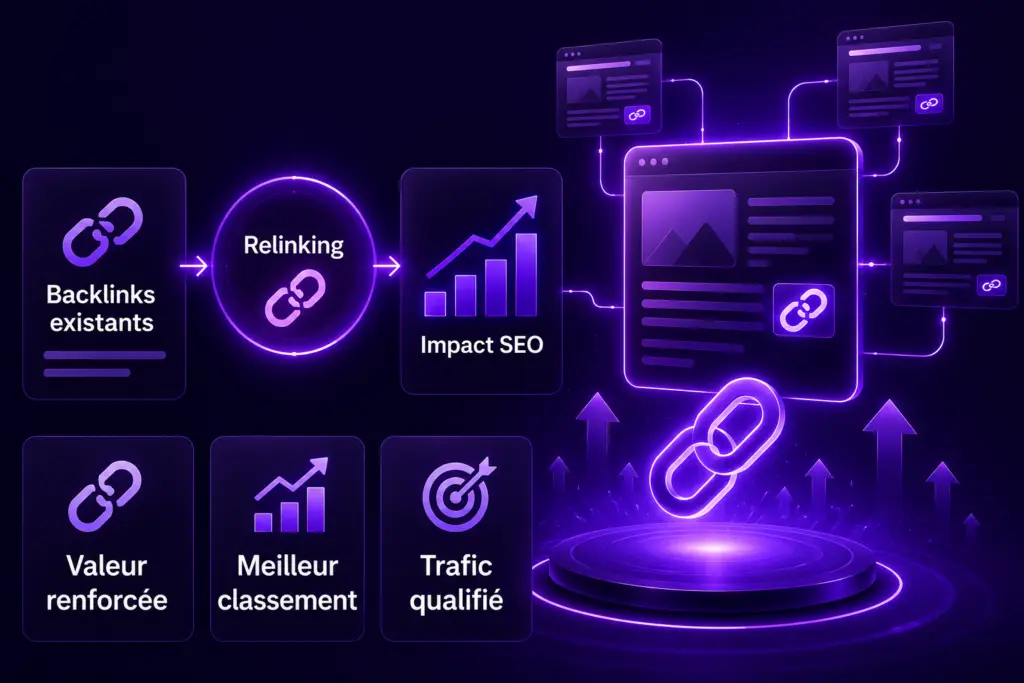
Key points:
- A backlink on a low-quality page passes on little authority – You're paying for a link that doesn't really work.
- SEO relinking involves strengthening T1 pages (the ones that already link to you) by sending them T2 and T3 links.
- The stronger a T1 page is, the more link equity it passes on to you – That's how PageRank works.
- Relinking is the most underutilized strategy in netlinking : It maximizes the impact of your existing budget.
- GEO AI Bonus : T1-optimized pages are more likely to be cited by ChatGPT, Gemini, or Perplexity.
You've invested in backlinks. You've commissioned sponsored articles, negotiated guest posts, and paid for links on sites with good Domain Ratings. And yet, your rankings aren't improving. Your organic traffic isn't taking off as expected.
The problem isn't necessarily the quality of your backlinks. It's the power of the pages that host them.
A link placed on a page that has no incoming links of its own, little traffic, and is barely crawled by Google? That link passes on to you only a tiny fraction of what it could. It’s like having a major highway leading to your site… but the only way to get there is via a dirt road that nobody uses.
The solution is relinking. Rather than buying yet more new backlinks, we strengthen the T1 pages that already link to you. We send them T2 links—and sometimes T3 links. We give them authority. And as a result, they automatically pass more authority on to you. This is a strategy that’s often overlooked—and yet it’s one of the most cost-effective in SEO.
What is SEO relinking?
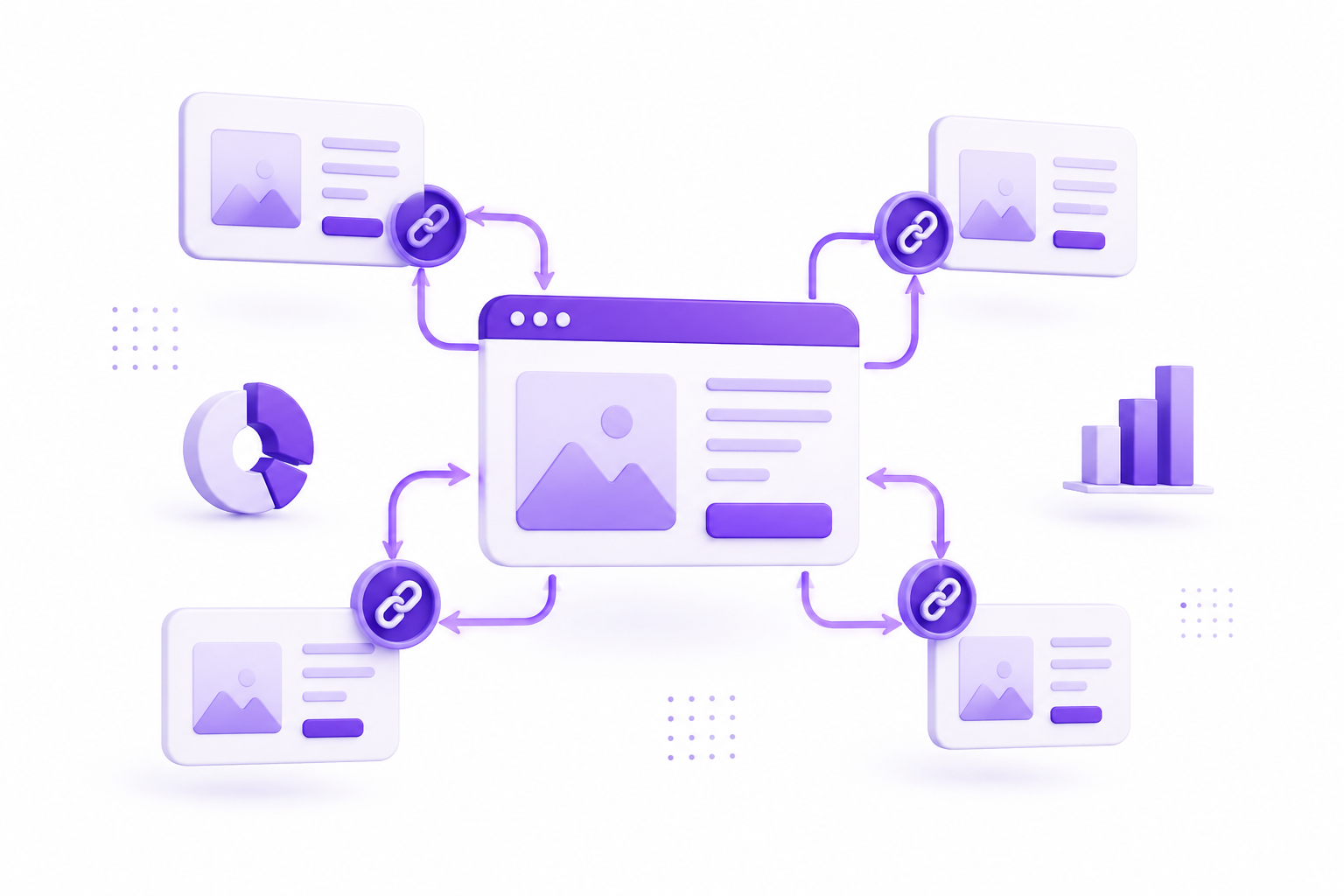
SEO relinking is the process of strengthening the external pages that host your backlinks, by sending them additional links called T2 (Tier 2) or T3 (Tier 3).
In practical terms:
- T1 (Tier 1) : the external page that contains a direct link to your site. This is your actual backlink—the one Google sees.
- T2 (Tier 2) : a page that links to your T1. It doesn't link to you directly, but it boosts the authority of the page that links to you.
- T3 (Tier 3) : a page that links to your T2. It brings the entire chain together.
The authority flow goes back to: T3 → T2 → T1 → your site.
Netlinking vs. relinking: What's the difference?
The netlinking involves acquiring new T1 backlinks to your site. This is the traditional approach.
The relinking (or netlinking/relinking) involves boosting the T1 backlinks you already have. It’s not competitive—it’s complementary. And that’s often where you’ll see the most immediate ROI.
The Concrete Analogy : Imagine a national highway that leads directly to your store (your T1 page). If this highway is poorly maintained, has little traffic, and lacks signage (= a T1 page with no inbound links), no one will use it. Relinking means building access ramps, putting up signs, and connecting this road to other routes. The result: more traffic, more authority, and more link equity passed on.
How does relinking work from a technical standpoint?
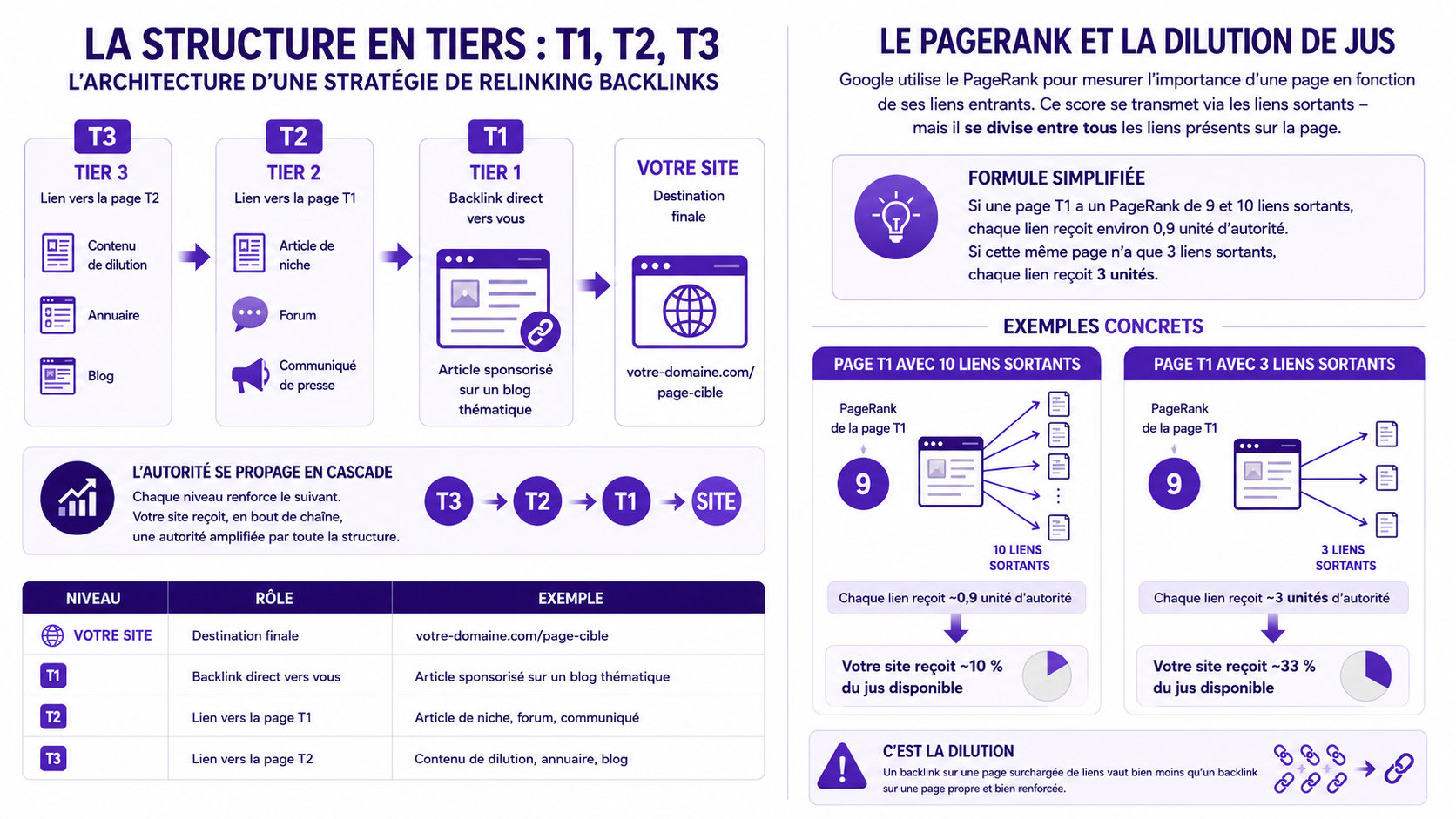
The three-tier structure: T1, T2, T3
Here's how to visualize the architecture of a backlink relinking strategy:
| Level | Role | Example |
|---|---|---|
| Your website | Final destination | your-domain.com/target-page |
| Q1 | Direct backlink to you | Sponsored article on a niche blog |
| T2 | Link to T1 | Niche article, forum post, press release |
| T3 | Link to T2 | Dilution content, directory, blog |
Authority spreads in a cascade. Each level reinforces the next. At the end of the chain, your site receives authority amplified by the entire structure.
PageRank and Link Juice Dilution
Google uses the PageRank to measure a page's importance based on its backlinks. This score is passed on through outbound links—but it is divided among all the links on the page.
Simplified formula : If a T1 page has a PageRank of 9 and 10 outbound links, each link receives approximately 0.9 units of authority. If that same page has only 3 outbound links, each link receives 3 units.
Practical example :
- Page T1 with 10 outbound links → Your site receives ~10 % of available juice.
- Page T1 with 3 outbound links → Your site receives ~33 % of available juice.
That's what's called link dilution. And that's why a backlink on a page cluttered with links is worth far less than a backlink on a clean, well-structured page.
Why Your Backlinks Are Losing Their Effectiveness (Without Relinking)
Most backlink campaigns suffer from the same structural problems. Here's why your links are underperforming.
T1 pages that are poorly indexed or rarely crawled. Google doesn't crawl every page on the internet with the same frequency. A T1 page with no inbound links may be crawled once a month, or even less often. If Google doesn't visit it regularly, the signal it sends to you is weakened.
T1 pages with too many outbound links. A sponsored article placed on a page that includes 20 other commercial links significantly dilutes the value it conveys. You’re sharing that value with all your competitors on the same page.
T1 pages that have no inbound links themselves. This is the most common scenario. You buy a link on a niche blog, but that blog has never been linked to by anyone else. Its T1 page is an orphan. It can’t pass on to you what it doesn’t have.
Result : You pay for backlinks that may pass on 10 % of their theoretical potential. The rest is lost along the way. Relinking is precisely what recovers those 90 % that were lost.
The 4 Concrete Benefits of Relinking
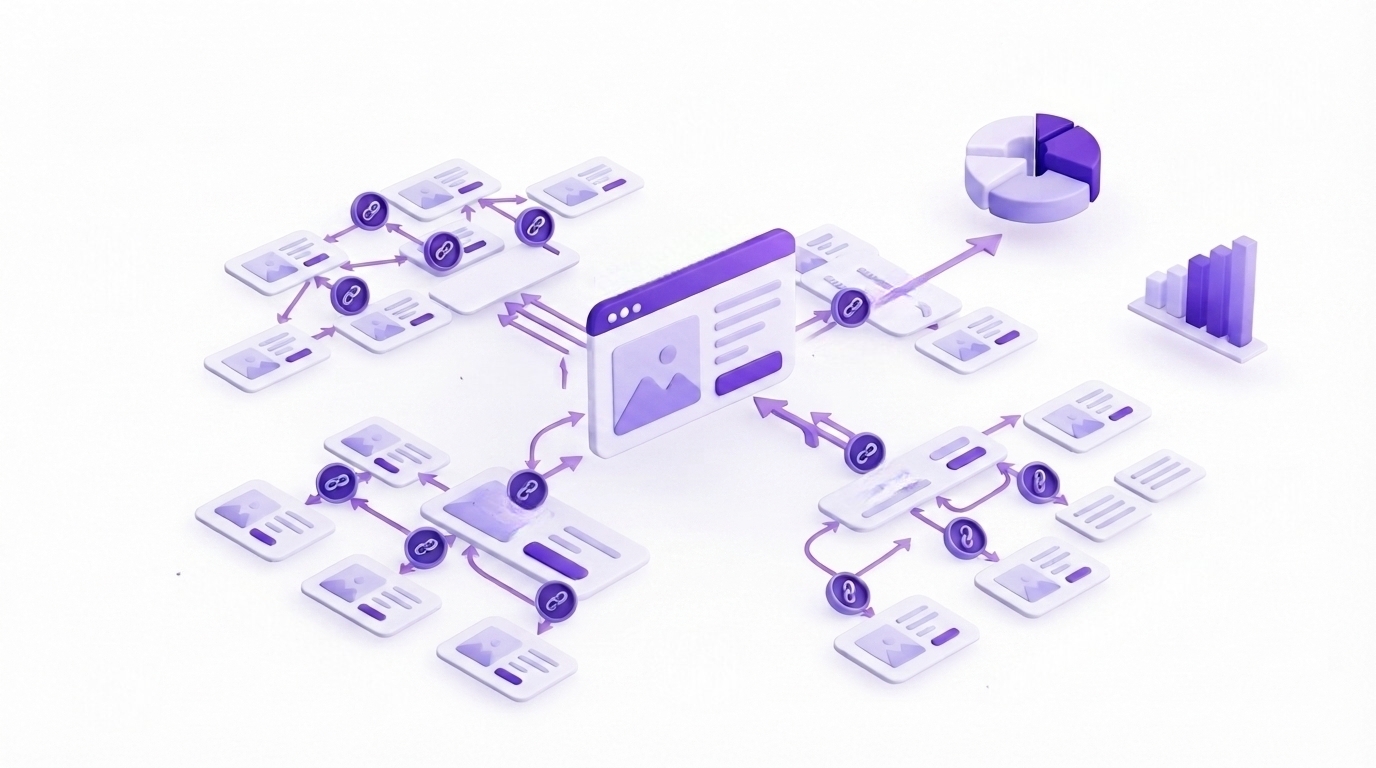
SEO relinking does more than just strengthen your backlinks—it improves your entire link-building strategy. By increasing the authority of the pages that link to your site, you’ll see tangible benefits in your search rankings, visibility, and the return on your SEO investments. Here are the four main benefits of a well-executed relinking strategy.
1. Expansion of Delegated Authority
This is the most direct benefit. By strengthening your T1 pages with T2 links, you increase their PageRank. They have more authority to pass on to you. As a result, your target pages gain more authority—without you having to acquire a single new T1 backlink.
2. Better indexing of T1 pages
T2 links direct Googlebot to your T1 pages. A page that is crawled more effectively is one whose signals are taken into account more quickly and more regularly by Google. This is particularly useful for recent backlinks that take a while to be recognized.
3. Naturalization of the backlink profile (to avoid penalties)
A 100 % link profile consisting of direct T1 links to your site may appear artificial to Google. A diversified T1/T2/T3 structure resembles a natural link ecosystem—sites that link to one another, content that enriches one another. This is exactly what Google expects from a healthy link profile. SEO relinking therefore helps protect your strategy against algorithmic penalties.
4. Maximum ROI on your existing backlink budget
That’s the financial argument. Rather than spending €500 on a new one-room apartment, you can spend €50 to €100 on a two-room apartment to expand 5 or 10 existing one-room apartments. The effort-to-impact ratio is often much higher. Boosting your existing backlinks is less expensive than buying new ones – and the results are often faster.
Netlinking vs. Relinking: What's the Difference?
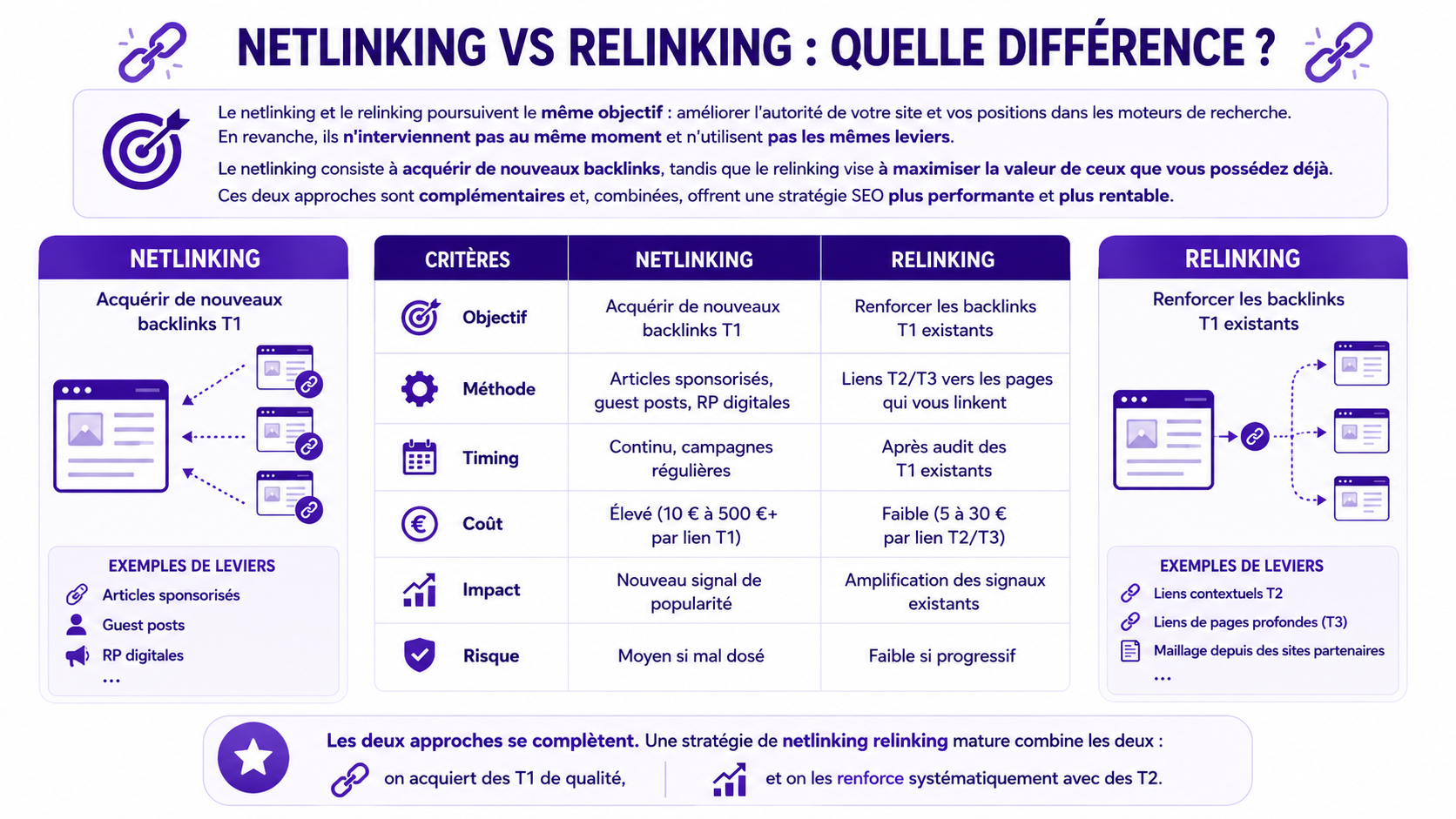
Netlinking and relinking share the same goal: to improve your website’s authority and your search engine rankings. However, they do not occur at the same time and do not use the same strategies.
Netlinking involves acquiring new backlinks, while relinking aims to maximize the value of the ones you already have. These two approaches are complementary and, when combined, offer a more effective and cost-efficient SEO strategy.
| Criteria | Netlinking | Relinking |
|---|---|---|
| Objective | Acquire new T1 backlinks | Strengthen existing T1 backlinks |
| Method | Sponsored articles, guest posts, digital PR | T2/T3 Links to Pages That Link to You |
| Timing | Ongoing, regular campaigns | After auditing the existing T1s |
| Cost | High (€10 to €500+ per T1 link) | Low (€5 to €30 per T2/T3 link) |
| Impact | Another sign of popularity | Amplification of Existing Signals |
| Risk | A measure so poorly calibrated | Mild but gradual |
The two approaches complement each other. A mature backlinking and relinking strategy combines both: you acquire high-quality T1 links and systematically reinforce them with T2 links.
When Should You Do Relinking? (A Practical Checklist)
Here are the four signs that indicate it's time to launch a backlink rebuilding campaign:
- You already have active T1 backlinks – at least 10 to 20 links pointing to your site.
- Your T1 pages have few or no inbound links – You can verify this on Ahrefs or Majestic by checking the number of referring domains for each T1 page.
- Your backlink profile is stagnating despite new backlinks – You're buying links, but your rankings aren't changing anymore.
- Do you want to maximize your impact without increasing your backlink budget? – Relinking is your best tool for boosting profitability.
If you check two or more boxes, a relinking strategy takes priority.
How do you implement a relinking strategy?
Step 1: Identify Your Strategic T1 Backlinks
Export your link profile from Ahrefs, SEMrush or Majestic. Sort your T1s by:
- Thematic Relevance (Is the website in your niche?)
- Page Authority (URL Rating on Ahrefs, Citation Flow on Majestic)
- Organic traffic to Page T1 (A page with traffic provides more value)
- Anchor used (T1s with optimized anchors should be reinforced as a priority)
Prioritize the 10 to 20 T1s with the highest potential—those that are already on authoritative domains but whose pages themselves are not very well optimized.
Step 2: Analyze the strength of T1 pages (DR, traffic, backlinks)
For each priority T1, check the following:
- Domain Rating (DR) from the domain hosting the T1—ideally DR 30+.
- Number of referring domains pointing specifically to the T1 page (not just the domain).
- Organic traffic from page T1 – a page with 0 visits per month is a page that Google undervalues.
- Number of outbound links on page T1—the more there are, the greater the dilution.
A T1 page with a DR of 45, 0 referring domains on the page, 0 traffic, and 15 outbound links? That’s your top priority for relinking.
Step 3: Create or order T2 links to these T1 pages
Two main options for building backlinks through T2s:
Option 1 – Specialized platforms. Tools such as LinksClub, Linksgarden or Seobooster allow you to purchase themed T2 links at affordable rates (€10 to €50 per link). These platforms have private networks of publisher sites, which reduces the risk of penalties.
Option 2 – Editorial Content. Publish articles on niche blogs, topic-specific forums, and press releases—making sure these pieces link back to your T1 pages. This approach is slower but generates more natural T2 links.
Basic Rule : plan ahead 3 to 5 T2 links per priority T1, gradually over 4 to 8 weeks. No sudden surge.
Step 4: Track the impact (rankings, organic traffic)
Track progress over 60 to 90 days:
- Positions landing pages for your strategic keywords (Google Search Console, SEMrush).
- Organic traffic target pages (Google Search Console).
- Q1 Page Metrics : Changes in DR, traffic, and the number of referring domains.
- Crawl Frequency T1 pages (Google Search Console > Coverage).
A well-reinforced T1 typically sees its authority increase within 4 to 8 weeks. The impact on your rankings follows with a delay of an additional 2 to 6 weeks.
Relinking and GEO AI: A Powerful Combination
This is an angle that few agencies are still capitalizing on in 2025–2026. And yet it is a measurable reality.
AI engines—ChatGPT, Gemini, Perplexity—rely on the authority of web pages to select their sources. Recent studies show that approximately 87 % of the links cited by ChatGPT come from Bing’s top 10 results for the same query. In other words: ranking highly = being cited by the AI.
However, a T1 page that is well-supported by relinking is a more authoritative page that is crawled more effectively and ranks higher. It is more likely to appear among the top search results. And therefore, it is more likely to be selected as a source by a generative model.
Relinking backlinks thus becomes a two-pronged strategy : It boosts your traditional SEO AND increases your visibility in AI-generated responses (known as GEO—Generative Engine Optimization).
In practical terms: if your T1 is a blog post on an authoritative niche website, and that post is well supported by T2s, it gains authority, traffic, and credibility. AI systems perceive it as a reliable source. They cite it. And your brand appears in their responses—without you having published anything on your own site.
This is a leverage effect that netlinking alone does not produce.
FAQ
Is relinking risky for SEO?
No, as long as you take a gradual and natural approach. Relinking only becomes risky if you create hundreds of T2s in just a few days on spammed sites. A gradual ramp-up—3 to 5 T2s per T1 over 4 to 8 weeks—is perfectly safe. The goal is to simulate a natural link ecosystem, not to force an artificial surge.
How much does a relinking campaign cost?
Much less than a traditional backlink campaign. Expect 10 to 50 € per T2 link on platforms such as LinksClub or Linksgarden. To boost 10 T1s with 3 to 5 T2s each, the budget is around €300 to €1,500 – compared to several thousand euros to purchase 10 new one-bedroom apartments of equivalent quality.
How many T2 links are required per T1 link?
The general rule is to 3 to 5 T2 links per T1, with a gradual increase. For highly strategic T1s (exact anchor, high-stakes commercial target page), you can go up to 8 to 10 T2s. For secondary T1s, 2 to 3 T2s are sufficient. What matters most is the quality and thematic relevance of the T2s, not their sheer volume.
Can relinking and netlinking be done at the same time?
Absolutely—and that’s actually the recommended strategy. Acquire new T1s at the same time, and systematically reinforce each new T1 with T2s as soon as they’re published. This combined approach (netlinking and relinking) maximizes the impact of every euro invested and accelerates your site’s rise in authority.
How long does it take to see the results of relinking?
The initial effects are visible in the metrics for T1 pages (DR, traffic) in 4 to 8 weeks. The impact on your rankings and organic traffic usually follows An additional 2 to 6 weeks delay. So count on 2 to 3 months for a complete overview of the results. It's faster than waiting for a new Q1 to be indexed, crawled, and factored in by Google.
Conclusion
Your backlinks are worth more than the link equity they currently pass on to you. Most T1 pages are dormant links—they exist and are active, but they aren’t being properly nurtured. SEO relinking is the key to reviving them.
This isn't some obscure technique reserved for experts. It's a simple concept: Strengthen what we already have before buying what we're missing. And in a climate where SEO budgets are under pressure, it is often the most cost-effective strategy available.
Would you like an audit of your backlink profile? We'll analyze your T1s for free. We identify pages with high potential, propose a prioritized relinking plan, and measure the impact together.